Showing posts with label infrastructure. Show all posts

Friday, April 8, 2016

Windows To Go


  • What is Windows To Go?


Windows To Go is a portable Windows installation on USB media (thumb drives, disc drives). Microsoft has introduced this feature in Windows 8 Enterprise for business users (admins, maintenance people or mobile users). Windows To Go enables users to carry their own Windows environment and boot it on several computers.
Due to license issues Windows To Go is officially restricted on Enterprise version of Windows 8, 8.1 and Windows 10.
http://borncity.com/win/2015/02/09/create-windows-to-go-from-any-windows-88-110-with-rufus/


  • Running Windows 8 from an External USB drive with Windows To Go 

https://www.youtube.com/watch?v=1WAAZ76cSEw


  • How to create Windows to Go flash drive | Win 8, 8.1 

https://www.youtube.com/watch?v=gYQ6De6hfzQ

Sunday, March 20, 2016

JVM (Java Virtual Machine) vs CLR (Common Language Runtime)

We present empirical evidence to demonstrate that there is
little or no difference between the Java Virtual Machine and
the .NET Common Language Runtime, as regards the compilation
and execution of object-oriented programs

The JVM . . .
• is stack-based
• is secure—type safety is guaranteed by preventing explicit
pointer manipulation
• has automatic memory management (garbage collection)
• is object-oriented, with primitive instructions for creating
objects, accessing object members

https://www.cs.utah.edu/~asbill/jsinger.pdf


  • Application virtualization software refers to both application virtual machines and software responsible for implementing them. Application virtual machines are typically used to allow application bytecode to run portably on many different computer architectures and operating systems. The application is usually run on the computer using an interpreter or just-in-time compilation (JIT).

https://en.wikipedia.org/wiki/Comparison_of_application_virtualization_software

Systems-on-a-Chip (SoCs)


  • server specialization and flexibility of the network is on the increase – and this means different workloads can be directed to the most appropriate hardware. Some applications require more compute, while others need more memory bandwidth or storage I/O. Some would benefit from Digital Signal Processing (DSP) functionality, while others would prefer a Field-Programmable Gate Array (FPGA)

The future of data center compute is in Systems-on-a-Chip (SoCs) customized for different workloads

Examples of existing ARM chips bound for the data center include the X-Gene SoC from Applied Micro, AMD’s Opteron A1100 (codenamed ‘Seattle’), and Cavium’s ThunderX.

http://www.datacenterdynamics.com/colo-cloud-/dcd-converged-arm-is-finally-arriving-to-the-data-center/92006.fullarticle


  • SoC vs. CPU 

What is a CPU?
it is ultimately a very fast calculator. It fetches data from memory, and then performs some kind of arithmetic (add, multiply) or logical (and, or, not) operation on that data.

What is an SoC?
An SoC, or system-on-a-chip to give its full name, integrates almost all of these components into a single silicon chip. Along with a CPU, an SoC usually contains a GPU (a graphics processor), memory, USB controller, power management circuits, and wireless radios (WiFi, 3G, 4G LTE, and so on). Whereas a CPU cannot function without dozens of other chips, it’s possible to build complete computers with just a single SoC.

The difference between an SoC and CPU
The number one advantage of an SoC is its size: An SoC is only a little bit larger than a CPU, and yet it contains a lot more functionality
Due to its very high level of integration and much shorter wiring, an SoC also uses considerably less power
Cutting down on the number of physical chips means that it’s much cheaper to build a computer using an SoC
The only real disadvantage of an SoC is a complete lack of flexibility. With your PC, you can put in a new CPU, GPU, or RAM at any time — you cannot do the same for your smartphone
http://www.extremetech.com/computing/126235-soc-vs-cpu-the-battle-for-the-future-of-computing


  • In hardware design, there are two approaches to solving the vast computing needs of a site like Facebook. There's the approach of “scale up” — building ever-increasing amounts of computing power in a given system. Or you can “scale out,” building an ever-increasing fleet of simple systems, each with a moderate amount of computing power.

As we continued to evolve our infrastructure, we realized 2S was the wrong tool for some of our needs. To provide our infrastructure with capacity that scales out with the demand, we designed a modular chassis that contains high-powered system-on-a-chip (SoC) processor cards, code-named “Yosemite.
https://code.facebook.com/posts/1616052405274961/introducing-yosemite-the-first-open-source-modular-chassis-for-high-powered-microservers-/


  • FPGAs provide a unique combination of highly parallel custom computation, relatively low manufacturing/engineering costs, and low power requirements.


FPGAs can be applied to assist a wide variety of enterprise applications.
    Offloading Communication Protocol Processing
    Encryption
    Spam Filtering
    Quantifying Speedup and Characterizing FPGA-Appropriate Applications
   
    Offloading Communication Protocol Processing
    Any time that information is transferred from one processor to another, some communication is necessary. If this communication does not go through shared memory, it requires the serialization and deserialization of various data structures and objects.  This translation overhead may be significant when considering the performance of large distributed or networked systems. In this case study, we look at how we can offload object marshaling for Remote Procedure Calls (RPCs) to an FPGA.
   
    Encryption
    As networked systems and services gain popularity, the security and computational overhead of encrypted communication becomes more important. Reconfigurable computing platforms seem to be ideal for accelerating encryption due to their adaptability and highly parallel execution model
   
    Spam Filtering
    Regular expressions are used by many e-mail systems to filter for spam. These systems may match against tens to hundreds of thousands of regular expressions. While this highly parallel problem can be mapped to FPGAs quite effectively, the conventional FPGA design methodology and execution model presents several practical problems for developers trying to create
   
   research.microsoft.com/en-us/projects/fpga_apps/


  • A set of FPGAs built onto a datacenter server rack could function as a GPU to boost the performance of one workload and get a software update that turns half into CPUs and the other half into image- or video-processing specialists – without requiring users to buy new hardware or even switch servers in between workloads.

In one example of FPGA-boosted datacenters, Microsoft was able to boost the throughput of servers running its Bing search engine by 95 percent at a cost of an additional 10 percent per server and 30 percent overall, according to a Microsoft report published in June 2014.
https://goparallel.sourceforge.net/intel-creates-xeon-fpga-powerhouse-with-16-7b-altera-buy


  • A field-programmable gate array (FPGA) is an integrated circuit designed to be configured by a customer or a designer after manufacturing – hence "field-programmable". 

https://en.wikipedia.org/wiki/Field-programmable_gate_array

RISC vs CISC

The CISC Approach
the entire task of multiplying two numbers can be completed with one instruction:
MULT is what is known as a "complex instruction." It operates directly on the computer's memory banks and does not require the programmer to explicitly call any loading or storing functions. It closely resembles a command in a higher level language. For instance, if we let "a" represent the value of 2:3 and "b" represent the value of 5:2, then this command is identical to the C statement "a = a * b."

One of the primary advantages of this system is that the compiler has to do very little work to translate a high-level language statement into assembly. Because the length of the code is relatively short, very little RAM is required to store instructions. The emphasis is put on building complex instructions directly into the hardware.


The RISC Approach
RISC processors only use simple instructions that can be executed within one clock cycle. Thus, the "MULT" command described above could be divided into three separate commands: "LOAD," which moves data from the memory bank to a register, "PROD," which finds the product of two operands located within the registers, and "STORE," which moves data from a register to the memory banks. In order to perform the exact series of steps described in the CISC approach, a programmer would need to code four lines of assembly:

there are more lines of code, more RAM is needed to store the assembly level instructions. The compiler must also perform more work to convert a high-level language statement into code of this form

https://cs.stanford.edu/people/eroberts/courses/soco/projects/risc/risccisc/

Advanced RISC Machines (ARM)


  • An ARM processor is one of a family of CPUs based on the RISC (reduced instruction set computer) architecture developed by Advanced RISC Machines (ARM).

http://whatis.techtarget.com/definition/ARM-processor

  • ARM architecture
ARM is a family of instruction set architectures for computer processors developed by British company ARM Holdings, based on a reduced instruction set computing (RISC) architecture.
http://en.wikipedia.org/wiki/ARM_architecture

  • An ARM processor is one of a family of CPUs based on the RISC (reduced instruction set computer) architecture developed by Advanced RISC Machines (ARM).
ARM makes 32-bit and 64-bit RISC multi-core processors. RISC processors are designed to perform a smaller number of types of computer instructions so that they can operate at a higher speed, performing more millions of instructions per second (MIPS).
http://whatis.techtarget.com/definition/ARM-processor

OpenCL(Open Computing Language)


  • OpenCL(Open Computing Language) is the open, royalty-free standard for cross-platform, parallel programming of diverse processors found in personal computers, servers, mobile devices and embedded platforms.

https://www.khronos.org/opencl/


  • Open Computing Language (OpenCL) is a framework for writing programs that execute across heterogeneous platforms consisting of central processing units (CPUs), graphics processing units (GPUs), digital signal processors (DSPs), field-programmable gate arrays (FPGAs) and other processors or hardware accelerators.

https://en.wikipedia.org/wiki/OpenCL

Sunday, September 6, 2015

IPAM (DDI)

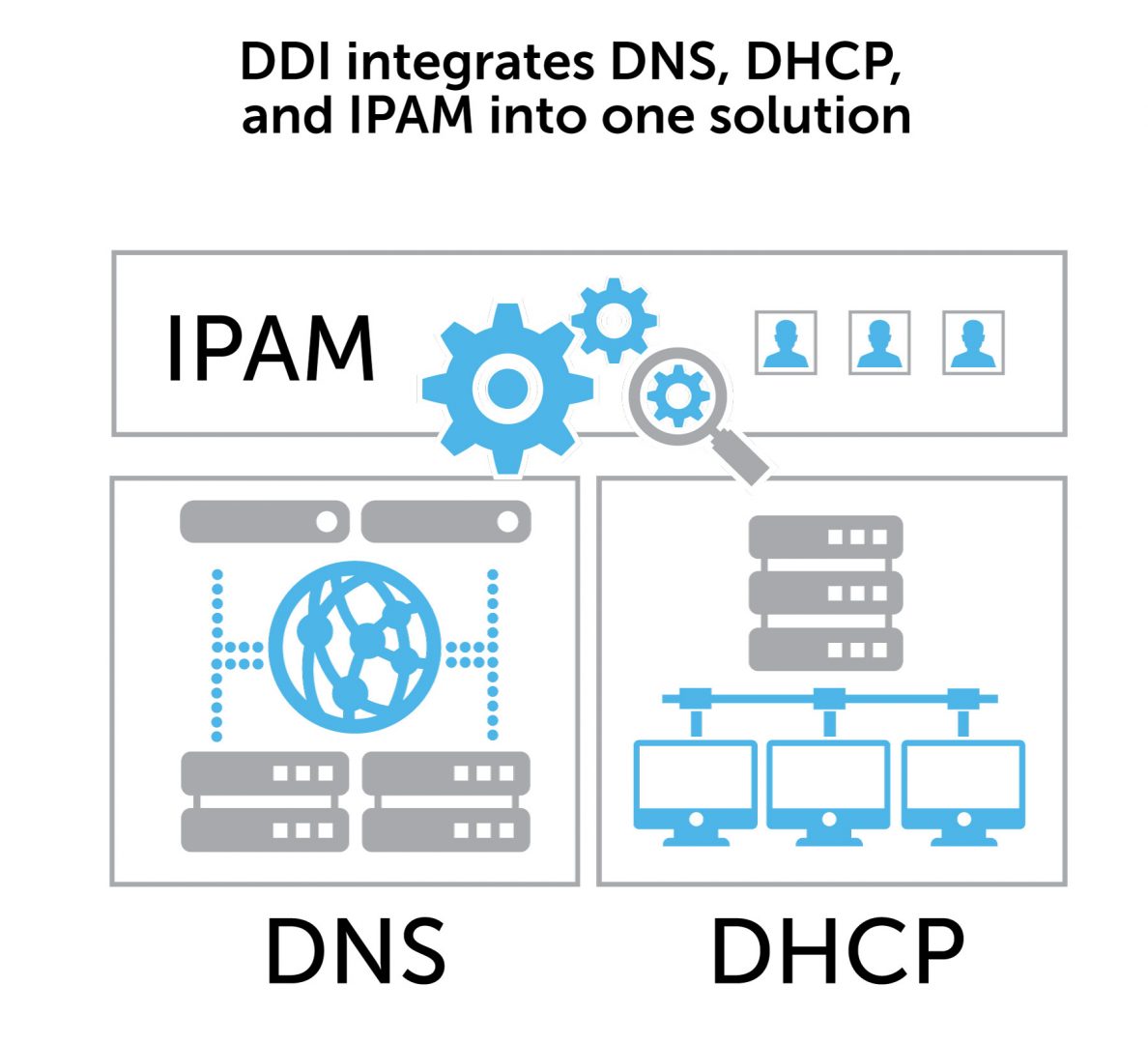
  • Simplify IP Address, DHCP, and DNS Management
Inventory, manage, and maintain accurate IP subnets and DHCP scopes
Track, assign, provision, and decommission IP addresses
Delegate and coordinate work across multiple admin teams
Monitor and improve IP performance 
http://go.solarwinds.com/en/ipam/sem/IPAM-Software?&CMP=KNC-TAD-GGL-IPAM_EMEA_X_P-IPAM-DL&gclid=CJnLp_nS1scCFcSRGwoduscDyA

  • As a central control point, IPAM provides an authoritative source for information about the network, providing valuable insight to enable informed management and security decisions for the enterprise.
https://www.bluecatnetworks.com/products/ip-address-management/


  • IP Address Management (IPAM) in Windows Server® 2012 and Windows Server® 2012 R2 is an integrated suite of tools to enable end-to-end planning, deploying, managing and monitoring of your IP address infrastructure, with a rich user experience. IPAM automatically discovers IP address infrastructure servers on your network and enables you to manage them from a central interface.
https://technet.microsoft.com/en-us/library/hh831353.aspx

  • Network Services DNS, DHCP & IPAM (DDI)
Infoblox’s industry leading integrated, centrally managed approach to delivering enterprise-grade DNS, DHCP, and IP address management (DDI) supports current and evolving IT needs while providing the highest standards for security, service uptime, and operational efficiencies
https://www.infoblox.com/products/network-services-dns-dhcp-ipam-ddi

  • EfficientIP's IP Address Management (IPAM) solution adapts to business and IT goals and objectives by allowing the creation of specific IPAM and VLANs deployment processes. SOLIDserver™ IPAM is a unified solution that allows you to design, deploy, and manage the IP addressing plan automatically applying allocation rules and simplifying deployments
http://www.efficientip.com/ip-address-management/

  • VitalQIP IP Address Management
The VitalQIP Appliance addresses the shift in the IP Address Management (IPAM) market towards appliances for increased reliability, manageability, scalability and security, and is the only appliance solution on the market that seamlessly integrates with VitalQIP DNS/DHCP & IP Address Management Software. - See more at: https://www.alcatel-lucent.com/products/vitalqip-ip-address-management#sthash.NinNdTx6.dpuf


  • An Overview of the DDI – DNS, DHCP and IP Address Management appliances:
First, the DDI appliances can themselves provide DNS, DHCP, IP Address Management functionalities as well as provide centralized management for third party services like Microsoft Server 2003/2008 and Unix based DNS/DHCP servers across multiple locations.
http://www.excitingip.com/909/why-ddi-dns-dhcp-and-ip-address-management-is-critical-for-distributed-organizations/

  • nipap is a sleek, intuitive and powerful IP address management system built to handle large amounts of IP addresses
https://spritelink.github.io/NIPAP/


  • IPplan is a free (GPL), web based, multilingual, TCP IP address management (IPAM) software and tracking tool written in php 4, simplifying the administration of your IP address space. IPplan goes beyond TCPIP address management including DNS administration, configuration file management, circuit management (customizable via templates) and storing of hardware information (customizable via templates).
http://iptrack.sourceforge.net/

  • GestióIP is an automated, Web based IPv4/IPv6 address management (IPAM) software. It features powerful network discovery functions and offers search and filter functions for both networks and host, permitting Internet Search Engine equivalent expressions.
http://www.gestioip.net/

  • NOC is an mature open-source IP Address Management (IPAM) solution, organizing the process of IP address space tracking
https://kb.nocproject.org/pages/viewpage.action?pageId=1507406

  • OpenNetAdmin provides a database managed inventory of your IP network. Each subnet, host, and IP can be tracked via a centralized AJAX enabled web interface that can help reduce tracking errors. A full CLI interface is available as well to use for scripting and bulk work.
http://opennetadmin.com/

  • openIPAM is a scalable IP address management solution developed and used by Utah State University's Department of Information Technology.
https://code.google.com/p/openipam/

terms

Open Virtualization Format (OVF)
Open Virtualization Format (OVF) is an open standard for packaging and distributing virtual appliances or, more generally, software to be run in virtual machines.
https://en.wikipedia.org/wiki/Open_Virtualization_Format

OVA and OVF: The Differences
OVF is not only the name of the packaging format standard, but it also refers to the package when distributed as a group of files. An OVA (open virtual appliance or application) is merely a single file distribution of the same file package, stored in the TAR format.
https://damiankarlson.com/2010/11/01/ovas-and-ovfs-what-are-they-and-whats-the-difference/

Wednesday, June 25, 2014

ARM architecture


  • ARM architecture
ARM is a family of instruction set architectures for computer processors based on a reduced instruction set computing (RISC) architecture developed by British company ARM Holdings.
A RISC-based computer design approach means ARM processors require significantly fewer transistors than typical CISC x86 processors in most personal computers.
This approach reduces costs, heat and power use.
These are desirable traits for light, portable, battery-powered devices—​including smartphones, laptops, tablet and notepad computers, and other embedded systems.
http://en.wikipedia.org/wiki/ARM_architecture

Friday, January 25, 2013

CISC


CISC
A complex instruction set computer CISC
A complex instruction set computer (CISC) is a computer where single instructions can execute several low-level operations (such as a load from memory, an arithmetic operation, and a memory store) and/or are capable of multi-step operations or addressing modes within single instructions.
The term was retroactively coined in contrast to reduced instruction set computer (RISC)

Examples of CISC instruction set architectures are System/360 through z/Architecture, PDP-11, VAX, Motorola 68k, and x86.
http://en.wikipedia.org/wiki/Complex_instruction_set_computing

RISC


RISC
Reduced instruction set computing, or RISC  is a CPU design strategy based on the insight that simplified (as opposed to complex) instructions can provide higher performance if this simplicity enables much faster execution of each instruction.
A computer based on this strategy is a reduced instruction set computer, also called RISC.
The opposing architecture is known as complex instruction set computing, i.e. CISC.

Well known RISC families include DEC Alpha, AMD 29k, ARC, ARM, Atmel AVR, Blackfin, Intel i860 and i960, MIPS, Motorola 88000, PA-RISC, Power (including PowerPC), SuperH, and SPARC
http://en.wikipedia.org/wiki/Reduced_instruction_set_computing

Saturday, January 7, 2012

What is the difference between an incremental backup and a differential backup?

An Incremental backup backs up only the selected files that have their archive bit set to ON, setting them back to OFF.
a backup of all files that are new or changed since the last backup whether it was a full or an incremental.
The advantage of an Incremental is that it takes the least amount of time and media of all the backup methods.
In the case of restoring with Incremental backups, all the Incremental backups since the last full backup plus the last full backup would be necessary.


A Differential backup backs up only the selected files that have their archive bit set to ON but does not set the archive bit back to OFF.
A Differential backup will back up all selected files that are new and changed since the last full backup.
at restore time; you'll need only the last full backup and the last differential to get a complete restore

Reference:
http://wiki.answers.com/Q/What_is_the_difference_between_an_incremental_backup_and_a_differential_backup


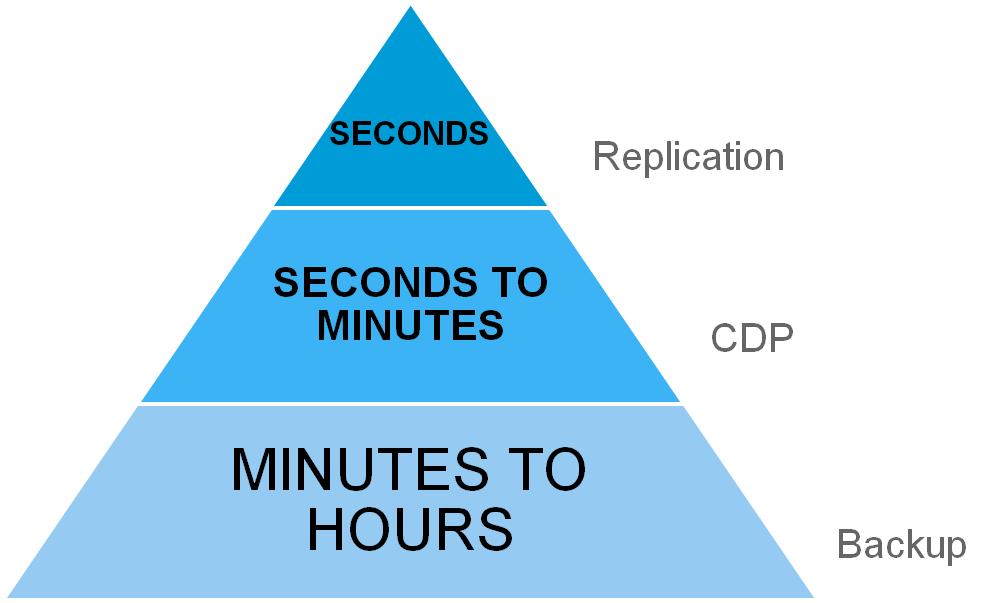
  • Continuous data protection (CDP), also called continuous backup or real-time backup, refers to backup of computer data by automatically saving a copy of every change made to that data, essentially capturing every version of the data that the user saves. In its true form it allows the user or administrator to restore data to any point in time

https://en.wikipedia.org/wiki/Continuous_Data_Protection


Simply stated, continuous data protection (CDP), also called continuous backup, is a storage system that backs up data whenever any change is made in it. In effect, CDP creates an electronic journal of complete storage snapshots, one for every instant in time that data modification occurs.

Why continuous data protection?
IT complexity: Continuous data protection helps ensure continuous availability of the varied, cross-platform environments.
Administrative capability:
Cost factor:Continuous data protection may prove to be a cheaper solution than traditional backup and recovery solutions. Software-based continuous data protection solutions today are easy to deploy and manage,
Data growth:  Remote users in geographically dispersed locations have access to email, core systems and other mission-critical applications. In such cases, continuous data protection makes perfect sense for enterprises with locations in multiple geographies.
Criticality of data:Continuous data protection technologies enable seamless backup and restore at the backend without affecting end users. Many continuous data protection solutions can recover data from any point in time within less than a minute.

Most of the challenges with continuous data protection emanate from the environment being targeted. A true continuous data protection solution will support real-time protection rather than scheduled snapshots. The change rate of the data sets that are being protected could pose challenges to the continuous data protection solution.
https://www.computerweekly.com/tip/Continuous-data-protection-Do-you-need-it